WordPress Security Sandboxing: A Comprehensive Guide for 2026
In the evolving digital landscape of 2026, the integrity and resilience of WordPress websites are paramount. A crucial aspect of achieving this robustness lies in robust security measures, and increasingly, this includes sophisticated approaches like WordPress security sandboxing. This technique, often quietly implemented by powerful plugins, creates isolated environments for processes, significantly mitigating the risks associated with vulnerable code or malicious attacks. As WordPress powers over 43% of all websites, understanding how plugins leverage sandboxing to enhance security is no longer an option but a necessity for any site owner or developer.
Understanding the Need for WordPress Security Sandboxing in 2026
The ubiquity of WordPress makes it a prime target for attackers. While the core platform is remarkably secure, the sheer volume of plugins and themes, combined with varied user configurations, introduces potential vulnerabilities. In 2026, the threat landscape is dominated by sophisticated zero-day exploits, supply chain attacks targeting third-party components within plugins, and advanced persistent threats (APTs). Indeed, these threats highlight the critical need for advanced defensive strategies. For a deeper dive into how plugins also manage complex dependencies, consider reading about WordPress Plugins and Semantic Versioning & Dependency Resolution (2026).
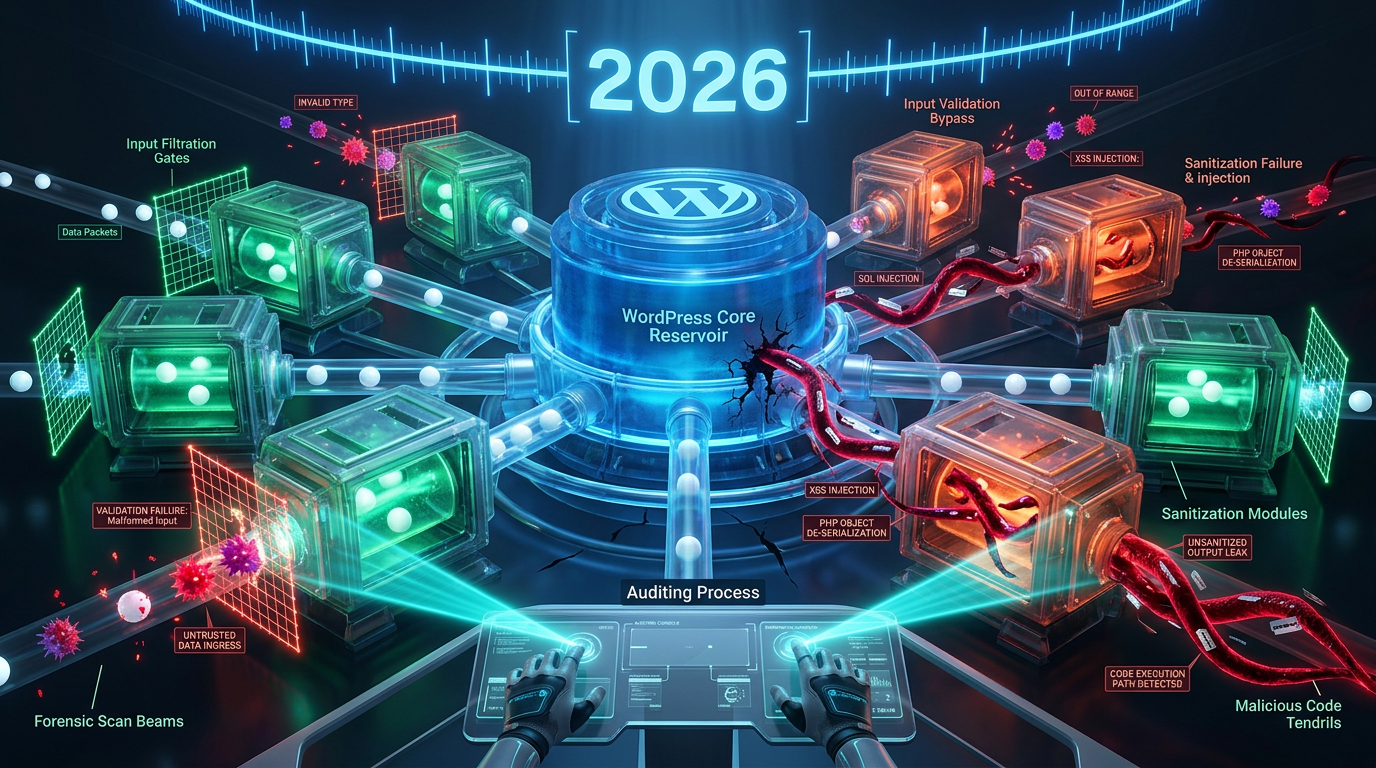
Traditional firewalls and intrusion detection systems provide perimeter defense, but they often fall short when malicious code executes within the WordPress environment itself. This is where WordPress security sandboxing becomes invaluable, acting as an internal immune system. It prevents a compromise in one plugin or component from escalating into a full-scale breach of the entire website.
The increasing complexity of modern web applications, often relying on multiple microservices and external APIs, further amplifies the need for isolation. Sandboxing ensures that even if an external dependency exploited by a plugin were compromised, its impact would be contained, preventing lateral movement within the server infrastructure. This is also relevant when plugins orchestrate Advanced Browser APIs & Device Functionality, which inherently introduces more interaction points.
The Evolving Threat Landscape and Plugin Vulnerabilities
Certainly, understanding the threats is the first step towards robust security. For instance, the management of ephemeral memory and RAM in plugins poses its own set of dangers, detailed in Ephemeral Memory & RAM Management Risks in WordPress Plugins (2026).
- Supply Chain Attacks: Compromised dependencies within legitimate plugins are a growing concern in 2026. Attackers inject malicious code into libraries or components that are then integrated into widely used plugins.
- Outdated Code: Despite best practices, many websites still run with outdated plugins or themes, leaving known vulnerabilities unpatched.
- Insecure Configurations: Even well-written plugins can be insecure if configured improperly, granting excessive permissions or exposing sensitive data.
- Zero-Day Exploits: Newly discovered vulnerabilities, for which no patch yet exists, pose an immediate and severe threat.
How Plugins Implement WordPress Security Sandboxing
While WordPress itself doesn't possess a native, robust sandboxing mechanism at a granular level for PHP execution, dedicated security plugins cleverly implement various techniques to create these isolated environments. These methods often involve OS-level isolation, PHP configuration adjustments, and virtualized execution environments. Clearly, these techniques require technical sophistication to achieve effective WordPress security sandboxing.
One common approach involves leveraging server-side technologies. For instance, some advanced hosting providers and security plugins utilize containerization technologies like Docker or even lightweight virtual machines to run specific plugin processes in isolated environments. This ensures that a memory overflow or arbitrary code execution exploit in one plugin cannot affect other applications or the core WordPress installation.
Other methods focus on restricting process capabilities. Plugins can employ Linux kernel features like cgroups or seccomp to limit system calls and resource usage for specific PHP processes, effectively creating a sandbox. This prevents a compromised plugin from, for example, accessing arbitrary files outside its designated directory or initiating network connections to suspicious external servers. Furthermore, this granular control is crucial. To grasp the broader context of WordPress plugin security, consider the discourse on WordPress Plugins Bridging the Gap to Quantum Computing & Post-Quantum Security in 2026.
Another layer of WordPress security sandboxing can be achieved by carefully managing file system permissions and PHP functions. Security plugins can dynamically modify PHP's open_basedir settings or disable dangerous functions like exec(), shell_exec(), and eval(), either globally or specifically for scripts identified as potentially risky. This prevents malicious code from executing arbitrary commands or accessing files it shouldn't.
Types of Sandboxing Techniques Utilized by Plugins
Plugins employ a variety of methods for effective sandboxing:
- Operating System Level Isolation: Using containers (e.g., Docker) or virtualization to create completely separate runtime environments for critical plugin components or even the entire WordPress installation.
- Resource Control (cgroups): Limiting CPU, memory, and I/O resources to prevent denial-of-service attacks or resource exhaustion from a rogue plugin.
- System Call Filtering (seccomp): Restricting the set of system calls a process can make, effectively limiting its interactions with the operating system kernel. This is a powerful form of WordPress security sandboxing.
- PHP Configuration Hardening: Dynamically adjusting
open_basedir, disabling dangerous functions, and enforcing strict error reporting to contain exploits. - Process Isolation: Running certain scripts with minimal user privileges to limit potential damage if compromised.
Benefits of Employing Multi-Layered WordPress Security Sandboxing
The advantages of incorporating multi-layered WordPress security sandboxing are profound and extend beyond just threat mitigation. It contributes significantly to a more resilient, stable, and manageable WordPress ecosystem for 2026 and beyond. Indeed, these benefits are essential for modern web operations.
Firstly, it drastically reduces the attack surface. By isolating components, even if an attacker finds a vulnerability in a less critical plugin, they are prevented from easily pivoting to more sensitive parts of the site, such as the database or administrator credentials. This containment strategy is key to minimizing the impact of a breach.
Secondly, it enhances stability. A misbehaving plugin, whether due to faulty code or a resource leak, can often crash an entire WordPress site. Sandboxing ensures that such issues are contained within their isolated environment, allowing the rest of the site to continue functioning normally. This proactive approach to damage control is invaluable for business continuity.
Thirdly, sandboxing facilitates safer plugin development and testing. Developers can test new plugin versions or custom code in a sandbox environment without risking damage to a live production site. This speeds up the development lifecycle and allows for more thorough pre-deployment testing, reducing the likelihood of introducing vulnerabilities.
Finally, in an era where compliance with data protection regulations is increasingly strict, sandboxing offers an additional layer of data segregation and protection. By isolating where certain sensitive data processing occurs, it can help meet compliance requirements by limiting the scope of potential data exposure during an incident. For further reading on this topic, explore the critical aspects of Digital Zoning & Regulatory Compliance in WordPress Plugins (2026).
Key Advantages of Sandboxing
The core benefits make sandboxing indispensable.
- Reduced Attack Surface: Limits the scope of potential damage from a single point of compromise.
- Enhanced Stability: Prevents rogue plugins from crashing the entire website.
- Safer Development: Allows for secure testing of new features and plugins.
- Improved Compliance: Aids in meeting data protection and privacy regulations by isolating sensitive operations.
- Faster Recovery: Contained breaches are quicker and easier to remediate.
Challenges and Considerations for Implementing WordPress Security Sandboxing
While the benefits are clear, implementing comprehensive WordPress security sandboxing is not without its challenges. It requires careful planning, technical expertise, and an understanding of the trade-offs involved. Therefore, preparedness is key. For a broader perspective on security risks, consider the insights on Digital Identity & Authentication Risks in WordPress Plugins (2026).
One primary concern is compatibility. Aggressive sandboxing measures can sometimes interfere with how certain plugins or themes interact with the WordPress core or other components. This can lead to unexpected errors, functionality breaks, or performance degradation. Rigorous testing is therefore essential after implementing any sandboxing solution.
Another challenge is performance overhead. Creating isolated environments, whether through containerization or advanced PHP configurations, can introduce a slight performance penalty. This overhead is usually negligible for most sites but can become a factor for high-traffic websites where every millisecond counts. Optimization and careful configuration are crucial to striking the right balance between security and speed.
Furthermore, maintaining sandboxed environments requires ongoing management. As plugins and WordPress core update, security rules and isolation configurations may need adjustment to ensure continued compatibility and effectiveness. This demands a proactive approach to website maintenance and security monitoring.
Finally, not all hosting environments are created equal. Shared hosting, for instance, often imposes limitations on what server-level configurations can be altered, making advanced sandboxing techniques more challenging to implement without root access or specialized hosting plans. Virtual Private Servers (VPS) or dedicated servers offer greater flexibility for robust sandboxing solutions.
Overcoming Sandboxing Hurdles
Addressing potential issues ensures successful implementation of WordPress security sandboxing.
- Thorough Testing: Always test sandboxing configurations on a staging environment before deploying to production.
- Performance Monitoring: Utilize tools to monitor website speed and resource usage to identify and address any bottlenecks. One valuable resource for performance best practices is MDN Web Performance documentation.
- Expert Consultation: Consider consulting with WordPress security specialists for complex implementations.
- Choosing the Right Host: Select a hosting provider that supports the necessary server-level configurations for advanced sandboxing. Reputable hosting providers often publish their security practices, such as those detailed by Kinsta's WordPress Security guide.
- Regular Updates: Keep all plugins, themes, and WordPress core updated to minimize compatibility issues with sandboxing rules. The official WordPress Security Resource is an excellent place to stay informed.
The Future of WordPress Security Sandboxing in 2026 and Beyond
Looking ahead into 2026 and beyond, the role of WordPress security sandboxing is only expected to grow in importance. With the increasing sophistication of cyber threats and the continuous expansion of the WordPress ecosystem, traditional security measures alone will no longer suffice. We anticipate several key trends shaping this domain.
Firstly, deeper integration of sandboxing features directly into hosting environments. Cloud providers and managed WordPress hosts are likely to offer more out-of-the-box sandboxed environments, making it easier for site owners to deploy this crucial security layer without extensive technical knowledge. This could involve serverless functions running specific plugin logic in isolated containers.
Secondly, Artificial Intelligence (AI) and Machine Learning (ML) will play a more significant role in dynamic sandboxing. AI can analyze plugin behavior in real-time, predict potential vulnerabilities, and automatically adjust sandboxing rules to contain emerging threats. This proactive, intelligent sandboxing will represent a significant leap forward in WordPress security.
Thirdly, the concept of "micro-sandboxing" might emerge, where individual functions or even lines of code within complex plugins are isolated if deemed potentially risky. This granular control would offer unprecedented levels of security but would also demand incredibly sophisticated underlying technology and careful implementation.
Ultimately, a collaborative effort between core WordPress developers, plugin authors, hosting providers, and security researchers will drive the evolution of sandboxing. As the silent augmenters, plugins will continue to be at the forefront, integrating these advanced security paradigms to ensure that WordPress remains a secure and reliable platform for generations to come.
Embracing and understanding advanced security architectures like WordPress security sandboxing will be vital for maintaining a robust online presence in the current and future digital landscape.
Frequently Asked Questions

Written by Aras Akıncılar
Uzun yıllara dayanan WordPress deneyimine sahip bir siber güvenlik uzmanı olarak, eklenti ekosisteminin derinlemesine analizine odaklanıyorum. Güvenlik açıkları, performans düşüşleri ve uyumluluk sorunları üzerine hazırladığım makalelerle, WordPress kullanıcılarının sitelerini daha güvenli ve verimli hale getirmelerine yardımcı olmayı hedefliyorum.