The Silent Chronologists: Auditing WordPress Plugins for Time-Based Logic Bombs & WordPress Temporal Attacks in 2026
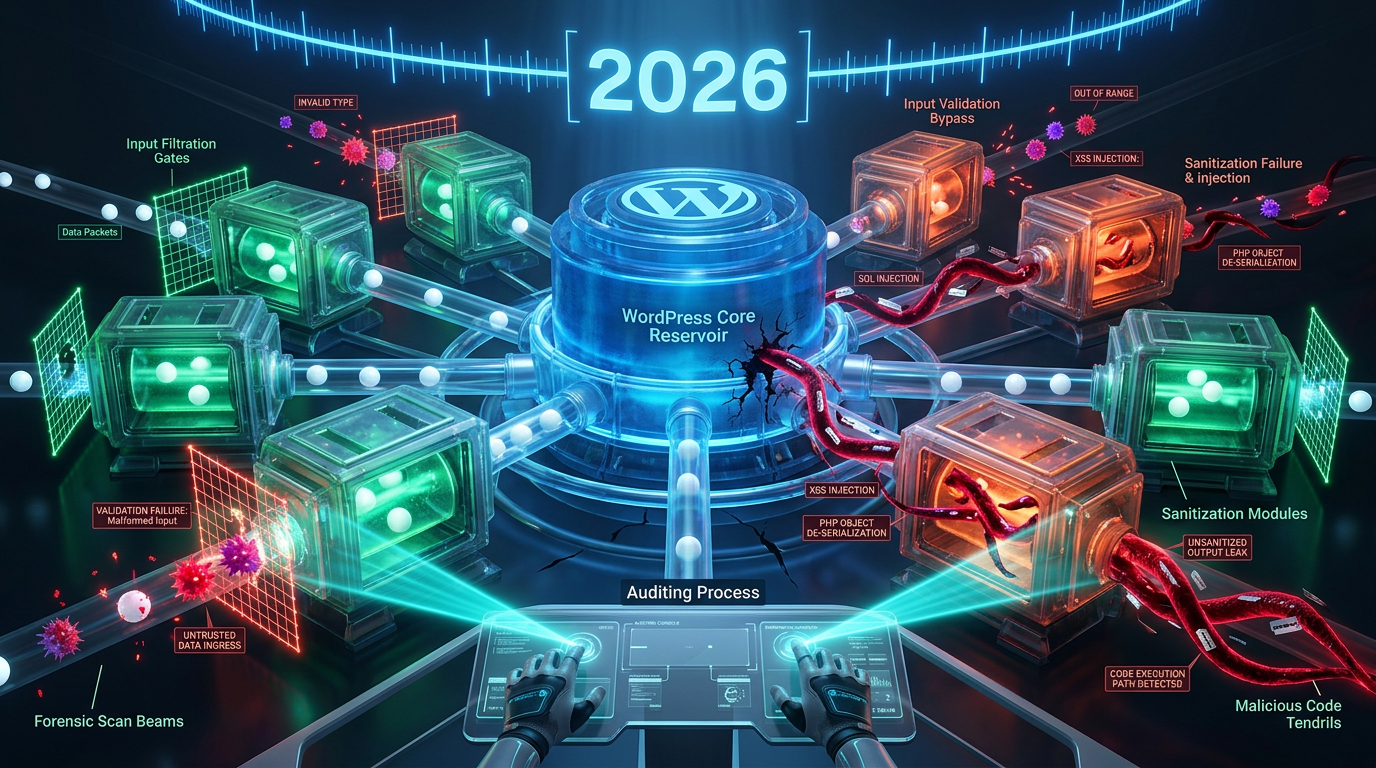
In the evolving landscape of cybersecurity, a particularly insidious threat looms for website administrators: WordPress temporal attacks. These sophisticated assaults leverage time-based vulnerabilities, often hidden within plugin code, to trigger malicious actions at predetermined moments. As we navigate 2026, understanding and mitigating these "logic bombs" within the WordPress ecosystem is paramount for maintaining secure, stable, and high-performance websites. This comprehensive guide will delve into the intricacies of auditing WordPress plugins to uncover and neutralize these stealthy chronologers before they can wreak havoc.
For related insights into plugin risks, explore The Silent Epigraphers: Unmasking Digital Annotation & Semantic Markup Risks in WordPress Plugins (2026) and The Silent Cartographers: Unmasking Digital Identity & Authentication Risks in WordPress Plugins (2026).
Understanding WordPress Temporal Attacks: The Clockwork of Compromise
WordPress temporal attacks are not your run-of-the-mill exploits. Unlike immediate SQL injection or cross-site scripting vulnerabilities, temporal attacks lie dormant, waiting for a specific date, time, or event to activate. Think of them as digital time bombs, carefully planted by malicious actors or even inadvertently introduced by developers failing to properly sanitize time-dependent functions. These attacks can manifest in various forms, from data deletion or modification to defacement or even complete site compromise, all triggered by an internal clock.
The danger is amplified by the sheer volume of plugins available for WordPress. Each plugin introduces a new layer of code, potentially a new avenue for such time-based vulnerabilities. Identifying these latent threats requires a specialized approach, moving beyond surface-level security scans and into a deeper examination of code logic and scheduling mechanisms.
What Constitutes a Temporal Attack?
- Time-Delayed Malicious Code: Code that executes after a certain date or time.
- Event-Triggered Exploits: Malicious actions that activate upon a specific system event, such as a user login, a specific number of page views, or an update trigger.
- License Key Expiry Abuse: Malicious code embedded to activate upon detection of an expired license key, potentially locking users out or deleting data.
- Cron Job Manipulation: Exploiting or inserting malicious cron jobs that run at scheduled intervals.
The Rise of Sophisticated Temporal Threats in 2026
As hacking techniques become more advanced, so do the methods for embedding and triggering WordPress temporal attacks. In 2026, we are seeing a trend towards more complex trigger conditions, often obfuscated within legitimate-looking code. These can include:
- Conditional logic based on external API responses.
- Dependent on specific WordPress core updates or plugin versions.
- Geographical or IP-based time triggers.
These sophisticated triggers make detection even more challenging, emphasizing the need for thorough and systematic auditing practices to prevent WordPress temporal attacks.
Auditing WordPress Plugins for Time-Based Logic: A Methodical Approach
Effective auditing for WordPress temporal attacks requires a blend of automated tools and manual code review. It's about looking for patterns, specific functions, and logical flows that could be manipulated by time or external events. The goal is to uncover any "logic bombs" that have been intentionally or unintentionally planted within the plugin's codebase.
Before any in-depth analysis, always ensure you are testing in a secure, isolated staging environment. Never test directly on a live production site when performing security audits.
Phase 1: Initial Scan and Dependency Analysis
Begin by using automated security scanners that can flag known vulnerabilities, but don't stop there. These tools are often limited in detecting zero-day or purposefully obfuscated temporal logic. Also, critically examine third-party dependencies. Many plugins rely on external libraries, and a vulnerability in one of these can be just as dangerous. Outdated code, especially in third-party libraries, is a common entry point for complex WordPress temporal attacks. For instance, consider how The Silent Bioreactors: How WordPress Plugins Metabolize & Excrete JavaScript Dependencies in 2026 might impact security.
- Utilize static analysis tools to check for common coding errors and security antipatterns.
- Scan for known Common Vulnerabilities and Exposures (CVEs) in all included libraries.
- Review the plugin's
composer.json,package.json, or similar dependency management files.
Phase 2: Code Review Focus: Time-Related Functions and Triggers
This is where the manual work becomes critical. You need to identify functions that interact with time, dates, or scheduled events. These are the prime candidates for housing temporal attack logic. Look for:
- WordPress Cron API Calls: Functions like
wp_schedule_event(),wp_clear_scheduled_hook(), and custom cron job definitions. - Date and Time Functions: PHP functions such as
date(),time(),strtotime(),gmdate(),mktime(), and their usage in conditional statements. - Conditional Logic Based on Time: Any
ifstatements that evaluate the current date or time, often coupled with actions like deleting data, changing user roles, or making external requests. - License Key Verification: How does the plugin handle license expiry? Is there any functionality tied to an expired license that could be exploited?
- External Data Fetching: Pay attention to any code that fetches data from external sources and how that data might influence time-based logic or trigger events.
Deep diving into how these functions are implemented and what actions they can trigger is key to uncovering potential WordPress temporal attacks. Look for obfuscated code or unusual logic around these time-sensitive operations.
Identifying Potential Risks: Beyond Obvious Vulnerabilities
Beyond direct malicious code, WordPress temporal attacks can often stem from poorly implemented features or excessive permissions. A plugin might have legitimate time-based functionality, but if it has overly broad permissions, that functionality could be hijacked. Therefore, a comprehensive audit must also look at:
Excessive Permissions and Capabilities
Many plugins request more permissions than they truly need. While not a direct temporal attack vector, excessive permissions can greatly amplify the impact of such an attack. If a temporal logic bomb activates, and the plugin has administrator-level capabilities, the damage could be catastrophic.
- Review the plugin's use of WordPress capabilities (e.g.,
manage_options,edit_posts,delete_users). - Assess if the requested capabilities are strictly necessary for the plugin's stated functionality.
- Look for custom capabilities defined by the plugin and how they are assigned.
Third-Party Dependencies and Supply Chain Security
The supply chain remains a significant concern in 2026. A plugin might be perfectly secure on its own, but if it uses an outdated or compromised third-party library, it opens a backdoor for WordPress temporal attacks. Thoroughly review all external libraries, SDKs, and APIs that the plugin integrates with. Examine their security advisories, update cycles, and the reputation of their maintainers. This is where topics like The Silent Augmenters: How WordPress Plugins Are Extending Core Functionality with Semantic Versioning & Dependency Resolution (2026) become crucial.
Consider the recent surge in software supply chain attacks; compromised dependencies are a prime target for embedding long-dormant temporal logic bombs. For more on this, refer to the OWASP Top 10 Web Application Security Risks, where supply chain vulnerabilities are consistently highlighted.
Insecure Configurations and Default Settings
A plugin might be secure by design, but insecure default settings or easily exploitable configuration options can create vulnerabilities. Are there any time-based settings that users can configure which, if set maliciously, could trigger an attack? An example would be an auto-delete function that, if set to a particular date by an attacker, could wipe out significant data.
Always ensure that default configurations are secure and that any time-sensitive settings require strong authentication and authorization to modify.
Best Practices for Mitigating WordPress Temporal Attacks in 2026
Preventing and mitigating WordPress temporal attacks is an ongoing process that requires vigilance and adherence to best practices. As the threat landscape evolves, so too must our defense strategies.
Regular Plugin Audits and Updates
Perform regular security audits of all installed plugins, especially after major updates or before any significant changes to your website. Always keep plugins and themes updated to their latest versions, as developers often release patches for newly discovered vulnerabilities, including temporal ones.
- Automate vulnerability scanning as part of your CI/CD pipeline if applicable.
- Subscribe to security advisories from plugin developers and reputable security firms.
Principle of Least Privilege (PoLP)
Ensure that all plugins operate with the absolute minimum set of permissions required to function. If a plugin does not need administrator privileges, do not grant them. This limits the potential blast radius of a successful WordPress temporal attack.
Code Review and Sandbox Testing
Whenever possible, review the source code of plugins, particularly those handling sensitive data or performing scheduled tasks. Before deploying any new plugin to a production environment, test it thoroughly in a sandboxed, isolated staging environment to observe its behavior and identify any suspicious time-triggered actions.
This is especially critical for custom-developed plugins or those from less reputable sources, where WordPress temporal attacks are more likely to be found. Understanding concepts from The Silent Augmenters: How WordPress Plugins Are Extending Core Functionality with Multi-Layered Security Sandboxing in 2026 can further enhance this approach.
Monitoring and Logging
Implement robust logging and monitoring solutions that track changes to critical WordPress files, database entries, and scheduled tasks. An unusual or unscheduled change to a cron job, for example, could be an early indicator of a temporal attack attempting to activate.
- Monitor for unexpected HTTP requests at unusual times.
- Track database changes, especially to
wp_options(for scheduled tasks) and plugin-specific tables. For best practices in logging, consult resources like the NCSC's guidance on logging for security architects.
By staying proactive and meticulous in auditing and managing your WordPress plugins, you can significantly reduce the risk of falling victim to WordPress temporal attacks in 2026 and beyond.
Frequently Asked Questions

Written by Aras Akıncılar
Uzun yıllara dayanan WordPress deneyimine sahip bir siber güvenlik uzmanı olarak, eklenti ekosisteminin derinlemesine analizine odaklanıyorum. Güvenlik açıkları, performans düşüşleri ve uyumluluk sorunları üzerine hazırladığım makalelerle, WordPress kullanıcılarının sitelerini daha güvenli ve verimli hale getirmelerine yardımcı olmayı hedefliyorum.