The Silent Compilers: Unmasking Just-In-Time Compilation & Runtime Code Generation Risks in WordPress Plugins (2026)
In the ever-evolving landscape of web development, WordPress continues to be a dominant platform, powering a significant portion of the internet. However, its expansive plugin ecosystem, while offering unparalleled flexibility, also introduces complex security considerations. One often-overlooked area of concern is the profound impact of Just-In-Time (JIT) compilation and runtime code generation on overall WordPress JIT compilation security. As we navigate 2026, understanding these mechanisms and their associated risks is paramount for maintaining robust and secure WordPress installations.
Understanding JIT Compilation and Runtime Code Generation in WordPress
At its core, JIT compilation is a method used by virtual machines (like the PHP engine, specifically through extensions like Opcache) to improve the performance of dynamically typed languages. This process involves compiling bytecode into native machine code during runtime, which subsequently speeds up execution. Frequently used code paths are optimized, leading to significant performance gains.
Runtime code generation, often intertwined with JIT, refers to the creation of new code on the fly during program execution. In WordPress plugins, this can manifest in various ways, such as dynamic content generation, template rendering, or even advanced caching mechanisms. While performance-enhancing, both techniques introduce a layer of complexity that can be exploited if not handled with extreme care. Therefore, understanding the nuances of WordPress JIT compilation security is vital.
How PHP JIT Impacts WordPress Performance and Security in 2026
With continued advancements in PHP, particularly JIT capabilities introduced in recent versions, WordPress sites can experience substantial performance gains. Faster page loads and reduced server strain are clear benefits. However, this increased dynamism also opens new avenues for sophisticated attacks in 2026.
Consider this: malicious code injected into a system that employs JIT compilation could potentially be compiled into native code. This makes detection and removal more challenging, and its execution becomes more efficient from an attacker's perspective. For instance, if a vulnerable plugin allows an attacker to inject custom PHP code, JIT could compile and execute this code at speeds comparable to legitimate application logic. This accelerates data exfiltration or system compromise, underscoring the critical need for robust WordPress JIT compilation security. For more insights into how plugins are adapting to modern web paradigms, explore The Silent Chameleons: How WordPress Plugins Are Adapting to Web3 & Decentralized Technologies in 2026.
Security Implications of Dynamic Code Execution on WordPress
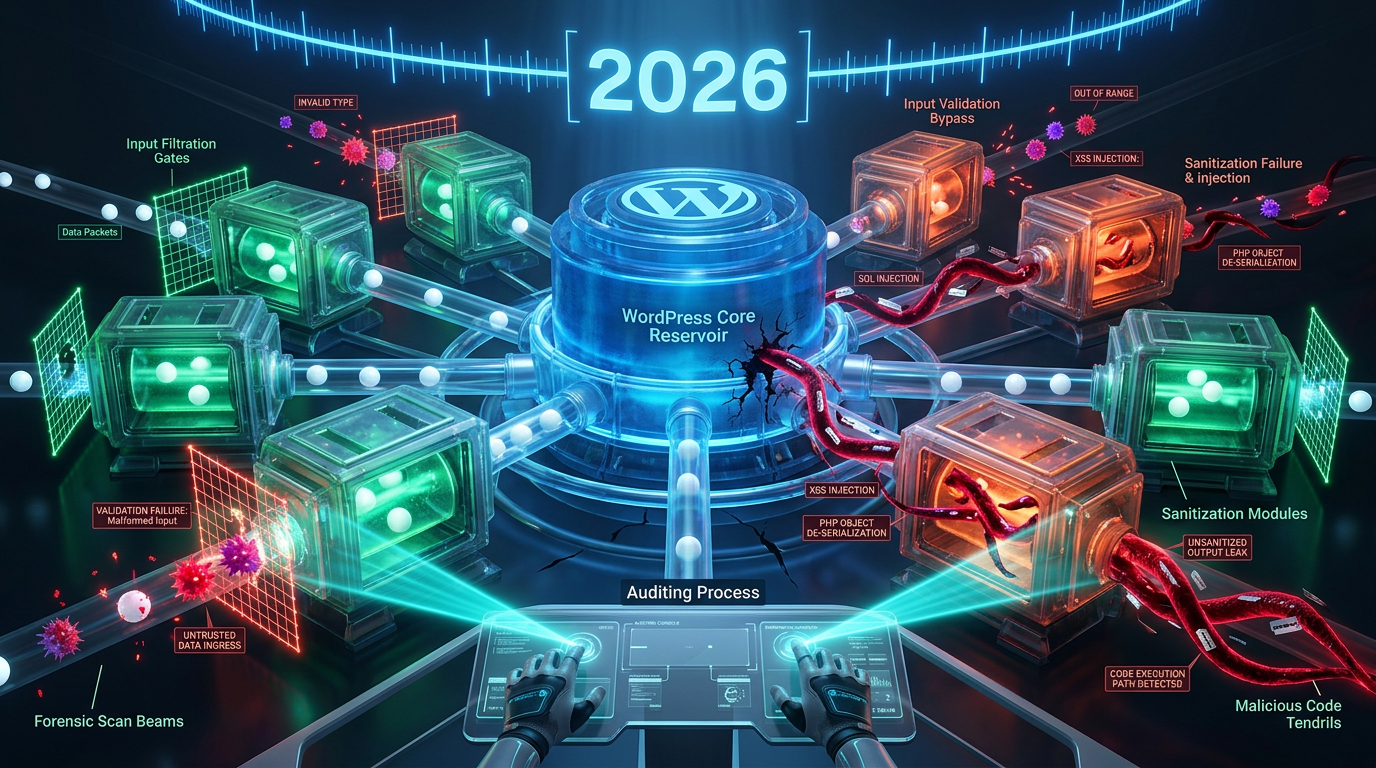
The very nature of dynamic code execution, a cornerstone of JIT and runtime code generation, presents inherent security challenges. When code is generated and executed on the fly, traditional static analysis methods may struggle to identify all potential vulnerabilities. Attackers can leverage this by crafting payloads that only reveal their malicious intent at runtime, thus circumventing many preventative measures. This often leads to digital identity and authentication risks.
Common attack vectors that exploit dynamic code execution in WordPress include:
- Remote Code Execution (RCE): This is arguably the most severe threat. If an attacker can inject and execute arbitrary code, they can take full control of the website and potentially the server.
- Cross-Site Scripting (XSS): While often associated with client-side attacks, persistent XSS vulnerabilities can be exacerbated if generated code includes or processes user-supplied input without proper sanitization.
- SQL Injection: Although less directly related to JIT, if plugin logic dynamically constructs SQL queries, vulnerabilities can lead to manipulated data or unauthorized access. Exploitation can be harder to detect if the query generation process is obscured by runtime mechanisms.
- Deserialization Vulnerabilities: Plugins that deserialize user-supplied data can be tricked into constructing malicious objects that execute arbitrary code. JIT compilation could then efficiently process such code. For further reading on related risks, see this insightful article on Deserialization of Untrusted Data.
Identifying Vulnerabilities in Plugins Utilizing Runtime Code Generation
Identifying vulnerabilities in plugins that extensively use runtime code generation requires a multi-faceted approach. Static analysis tools, while useful, may miss vulnerabilities that only manifest when code is actually executed. Dynamic analysis, including fuzzing and penetration testing, therefore becomes crucial. Security audits should pay close attention to:
- Input validation and sanitization for all user-supplied data, especially in functions that generate or evaluate code.
- The use of
eval(),create_function(), or similar constructs, which are often red flags for potential RCE vulnerabilities if not handled with extreme caution. - Third-party libraries and dependencies, as vulnerabilities within these can be inherited by the parent plugin and exploited through dynamic execution. For a broader perspective on supply chain attacks, consider this resource from CISA on Supply Chain Attacks.
- Permission models – ensuring that dynamically generated code does not operate with excessive privileges.
Best Practices for Enhancing WordPress JIT Compilation Security
Mitigating the risks associated with JIT compilation and runtime code generation requires a proactive and comprehensive security posture. For WordPress site owners and plugin developers alike, several best practices can significantly enhance WordPress JIT compilation security.
For WordPress Site Owners:
- Keep Everything Updated: Regularly update WordPress core, themes, and all plugins. Updates often include critical security patches for known vulnerabilities, some of which might relate to code execution or JIT interactions.
- Choose Reputable Plugins: Only install plugins from trusted sources and developers with a strong security track record. Review plugin ratings, support forums, and recent activity.
- Implement a Web Application Firewall (WAF): A WAF can detect and block malicious requests attempting to exploit vulnerabilities, including those targeting dynamic code execution, before they reach your WordPress installation.
- Regular Security Scans: Utilize security scanning tools designed for WordPress to identify potential vulnerabilities, suspicious file changes, and indicators of compromise.
- Principle of Least Privilege: Ensure that your server environment and WordPress user roles operate with the minimum necessary permissions.
- Monitor Server Logs: Keep an eye on server error logs and access logs for unusual activity that might indicate an attempted or successful attack exploiting runtime code weaknesses.
For Plugin Developers:
- Strict Input Validation and Sanitization: This is the golden rule. Every piece of user input, whether from forms, URLs, or APIs, must be rigorously validated and sanitized to prevent code injection.
- Avoid
eval()and Similar Functions: Where possible, avoid dynamic code execution functions likeeval(),create_function(), or complex string transformations into code. If absolutely necessary, employ them with extreme caution and robust security controls. - Context-Aware Escaping: Always escape output based on the context (HTML, attribute, JavaScript, CSS) to prevent XSS.
- Security by Design: Integrate security considerations from the initial design phase of your plugin development.
- Regular Code Audits: Conduct frequent security audits of your plugin code, ideally with independent security researchers. Learn more about auditing for advanced user engagement in The Silent Empaths: Auditing WordPress Plugins for Advanced User Engagement & Behavioral Science in 2026.
- Stay Informed: Keep abreast of the latest security vulnerabilities and best practices, especially concerning PHP versions and their JIT capabilities.
- Secure Deserialization: If you must deserialize user-supplied data, use secure alternatives or implement stringent checks to prevent PHP object injection.
The Ongoing Challenge of WordPress JIT Compilation Security in 2026
As we move further into 2026, the reliance on JIT compilation and other performance optimization techniques will only grow. While these advancements bring undeniable benefits in terms of speed and efficiency for WordPress websites, they simultaneously elevate the security stakes. The dynamic nature of modern web applications, coupled with the vast number of interconnected plugins, creates a complex attack surface.
Maintaining strong WordPress JIT compilation security is not a one-time task but an ongoing commitment. It requires continuous vigilance from site administrators, responsible development practices from plugin creators, and a collective understanding of the evolving threat landscape. The "Silent Compilers" empower performance, but their silent processing must not be allowed to become a silent gateway for threats.
Future Trends and Proactive Measures for WordPress Security
Looking ahead, the WordPress ecosystem can expect even more sophisticated attacks targeting runtime code generation. Machine learning (ML) and artificial intelligence (AI) are already being employed by attackers to craft highly obfuscated and adaptive payloads. On the defensive side, AI-powered security solutions will also play a crucial role in detecting anomalies in JIT compiled code execution and identifying novel attack patterns. The intersection of AI and security is a rapidly evolving field; for a deeper dive, explore a resource like NIST's work on AI Security.
Proactive measures for the future will include:
- Enhanced Threat Intelligence Sharing: Faster and more effective sharing of threat intelligence among WordPress security researchers and hosting providers.
- Automated Code Analysis with AI: Development of more advanced static and dynamic analysis tools that can leverage AI to predict and identify runtime vulnerabilities, especially those born from dynamic code generation. For a related topic, consider The Silent Augmenters: How WordPress Plugins Are Leveraging AI for Advanced Code Generation & Self-Optimization in 2026.
- Sandboxing and Isolation: Increased adoption of sandboxing techniques at the server level to isolate untrusted code execution, limiting the blast radius of successful exploits.
- Performance vs. Security Trade-offs: A continued industry-wide discussion and balance between pushing for maximum performance through JIT and ensuring uncompromised security.
By understanding the mechanisms of JIT compilation and runtime code generation, and by diligently applying best security practices, the WordPress community can collectively work towards a more secure and resilient web. This is especially true as the "Silent Compilers" continue to enhance performance on millions of websites worldwide in 2026 and beyond. This commitment ensures robust WordPress JIT compilation security for all users.
Frequently Asked Questions

Written by Aras Akıncılar
Uzun yıllara dayanan WordPress deneyimine sahip bir siber güvenlik uzmanı olarak, eklenti ekosisteminin derinlemesine analizine odaklanıyorum. Güvenlik açıkları, performans düşüşleri ve uyumluluk sorunları üzerine hazırladığım makalelerle, WordPress kullanıcılarının sitelerini daha güvenli ve verimli hale getirmelerine yardımcı olmayı hedefliyorum.