The Silent Orchestrators: How WordPress Plugin Workflow Automation Dictates Backend Operations & Business Logic in 2026
In the rapidly evolving digital landscape of 2026, the efficiency and responsiveness of online businesses are paramount. At the heart of many successful operations lies robust backend management, and for WordPress users, this increasingly means leveraging sophisticated WordPress plugin workflow automation. These powerful tools act as the silent orchestrators, streamlining repetitive tasks, connecting disparate systems, and ultimately defining the core business logic of a website. Understanding how to effectively implement and manage these automation plugins is crucial for maintaining a competitive edge and ensuring a smooth, secure, and high-performing WordPress environment.
Understanding WordPress Plugin Workflow Automation in 2026
The concept of workflow automation has matured significantly within the WordPress ecosystem. No longer confined to simple form submissions, today's plugins facilitate complex, multi-step processes that once required custom coding or hefty enterprise solutions. From lead nurturing sequences to inventory management, and from content publishing schedules to customer support ticket routing, these plugins are the connective tissue linking various aspects of a business's online presence.
Key Drivers of Automation Adoption
- Increased Business Complexity: As businesses scale, the volume of tasks and interactions grows exponentially, making manual processing unsustainable.
- Demand for Real-time Responsiveness: Customers and clients expect immediate feedback and service, which only automation can consistently deliver.
- Integration Ecosystem Expansion: A wider array of APIs and third-party services now seamlessly integrate with WordPress, enabling more comprehensive automation. Discover more about how these integrations impact security in The Silent Conductors: How WordPress Plugins Dictate Third-Party Service Integrations & Their Security Implications in 2026.
- Focus on Core Business: Automating mundane tasks allows teams to concentrate on strategic initiatives and higher-value activities.
Evolution of Automation Capabilities
Looking back just a few years, many automation tasks were rudimentary. Fast forward to 2026, and we're seeing AI-driven conditional logic, natural language processing for content tagging, and predictive analytics guiding automated marketing campaigns. This level of sophistication transforms WordPress from a mere content management system into a powerful and agile business platform, largely thanks to advancements in WordPress plugin workflow automation.
Evaluating Functionalities and Business Logic with WordPress Plugin Workflow Automation
When selecting and implementing a WordPress plugin workflow automation solution, it's vital to critically assess not just its advertised features, but how it truly impacts and defines your business logic. A well-chosen plugin can transform operations, while a poorly integrated one can introduce inefficiencies or even critical errors.
Core Functionalities to Look For
- Event-Based Triggers: The ability to initiate workflows based on specific actions (e.g., user registration, product purchase, comment submission).
- Conditional Logic: Allowing workflows to branch and adapt based on predefined criteria, ensuring custom responses for different scenarios.
- Action Chains: Defining a sequence of actions that execute automatically, such as sending emails, updating databases, or creating CRM entries.
- Integrations: Seamless connectivity with other essential tools like CRM, email marketing platforms, payment gateways, and accounting software.
Defining Business Logic Through Automation
Consider an e-commerce scenario: when a customer places an order, the WordPress plugin workflow automation might trigger a series of actions:
- Send an order confirmation email to the customer.
- Update inventory levels in the warehouse management system.
- Create a new entry in the CRM for follow-up marketing.
- Notify the fulfillment department of a new order.
- If the order value exceeds a certain amount, trigger a personalized upsell email after two days.
Each step in this chain directly reflects a piece of the business's operational logic, executed consistently and without manual intervention. This consistency is a cornerstone of professional service delivery.
Potential Risks and Threats: Staying Secure in 2026
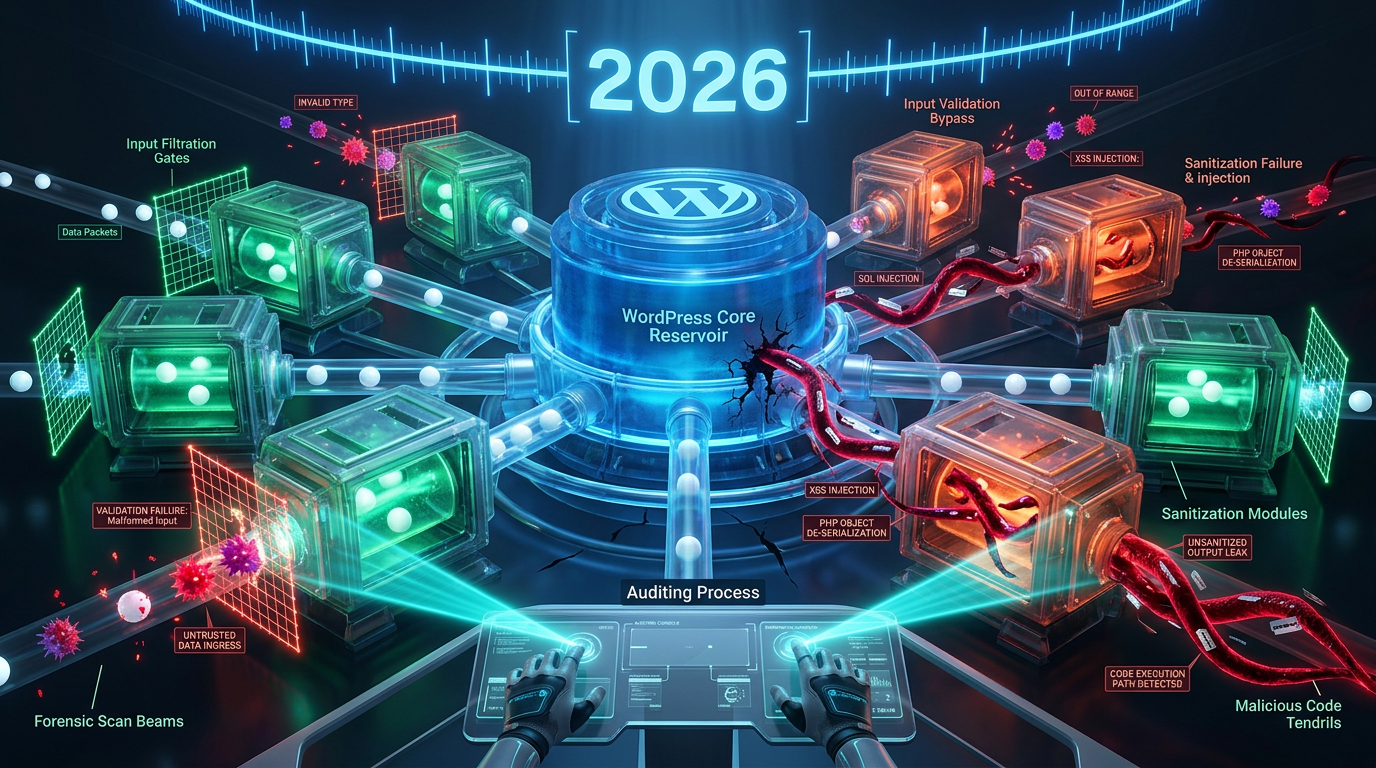
While the benefits of WordPress plugin workflow automation are undeniable, it's crucial to acknowledge and mitigate the inherent risks. The power to automate also brings the responsibility to ensure security, performance, and compatibility. As we move through 2026, cyber threats are more sophisticated than ever, and a single vulnerable plugin can compromise an entire website.
Security Vulnerabilities to Watch Out For
- Outdated Code: Plugins that are not regularly updated are prime targets for attackers who exploit known vulnerabilities. Always prioritize plugins with active development.
- Insecure Configurations: Default settings or easily guessable credentials can be a major entry point. Always review and secure plugin configurations.
- Excessive Permissions: A plugin requesting more access than it needs is a red flag. Grant only the necessary permissions to minimize the attack surface.
- Third-Party Dependencies: Many plugins rely on external libraries or APIs. A vulnerability in one of these dependencies can impact your site, even if the plugin itself is secure. This is also covered in The Silent Conductors: How WordPress Plugins Dictate Third-Party Dependency Loading & Supply Chain Integrity in 2026.
- Malicious Code Injection: Always download plugins from reputable sources to avoid those bundled with hidden, harmful code.
Performance and Compatibility Concerns
Beyond security, ill-optimized or incompatible automation plugins can severely degrade website performance, leading to slow loading times and a poor user experience. Regular monitoring and testing are essential.
- Resource Hogs: Some plugins consume excessive server resources, particularly those running complex background processes. Consider how WordPress Plugins are Bidding for Database Resources in 2026, impacting overall performance.
- Conflicts with Other Plugins/Themes: Incompatible code can lead to errors, broken functionalities, or even bring down the site.
- Database Bloat: Automation often involves logging and storing data; ensure plugins manage their database footprints efficiently.
Best Practices for Maintaining a Secure and Efficient WordPress Automation Environment
To fully harness the power of WordPress plugin workflow automation without falling prey to its potential pitfalls, adherence to best practices is non-negotiable in 2026. A proactive approach is always more effective than a reactive one when it comes to website security and performance.
Strategic Plugin Selection
Before installing any automation plugin, conduct thorough due diligence. Check developer reputation, read recent reviews, and verify compatibility with your current WordPress version and other essential plugins. Look for plugins with a strong track record of security updates and responsive support. For insights into ensuring plugin integrity, refer to this Wordfence guide on WordPress Plugin Best Practices.
Regular Audits and Monitoring
- Security Scans: Implement regular security scans to identify vulnerabilities within your plugins and core WordPress installation.
- Performance Monitoring: Utilize tools to monitor site speed and server resource usage, identifying any performance bottlenecks caused by automation plugins.
- Workflow Review: Periodically review your automated workflows to ensure they are still relevant, efficient, and aligned with your current business logic.
Backup and Disaster Recovery Protocols
No matter how diligent you are, issues can still arise. A robust backup strategy is your last line of defense. Ensure you have regular, automated backups of your entire WordPress site, including the database and files, and test your restore process periodically.
Staying Informed on Plugin Updates and Threat Intelligence
The WordPress ecosystem is dynamic. Subscribe to security advisories, follow reputable WordPress news sources like WP Tavern, and always update your plugins and WordPress core as soon as new, stable versions are released, especially those addressing security patches. Proactive maintenance is key to long-term stability.
The Future of WordPress Plugin Workflow Automation: Trends in 2026 and Beyond
The trajectory of WordPress plugin workflow automation continues upwards, with exciting developments on the horizon for 2026 and subsequent years. We can expect even greater integration, intelligence, and accessibility, making sophisticated automation available to a wider range of users.
Emerging Trends
- AI and Machine Learning Integration: Expect more plugins to leverage AI for intelligent decision-making within workflows, natural language processing for content, and predictive analytics for tailored user experiences. For a broader understanding of AI's impact, see this IBM overview on Workflow Automation.
- No-Code/Low-Code Automation: The drive for accessibility means more intuitive visual builders and simpler interfaces, allowing business users without coding knowledge to create complex workflows. This trend is explored further in The Silent Coders: How WordPress Plugins Are Leveraging No-Code/Low-Code Platforms & Their Security Implications in 2026.
- Hyper-Personalization at Scale: Automation will enable a degree of customer personalization that was previously impossible, adapting website content, offers, and communications based on individual user behavior.
- Edge Computing for Performance: As workflows become more complex, we might see automation logic being processed closer to the user (edge computing) to improve speed and responsiveness.
- Enhanced Security Automation: Security will increasingly be built directly into automation workflows, with real-time threat detection and automated response mechanisms.
Impact on Business Operations
These trends suggest a future where WordPress-powered businesses are more agile, responsive, and data-driven. The role of WordPress plugin workflow automation will evolve from merely executing tasks to proactively optimizing operations, identifying opportunities, and protecting the digital assets it manages. By staying abreast of these developments and continuously evaluating their automation strategies, businesses can ensure their WordPress sites remain at the forefront of efficiency and innovation.
Frequently Asked Questions

Written by Aras Akıncılar
Uzun yıllara dayanan WordPress deneyimine sahip bir siber güvenlik uzmanı olarak, eklenti ekosisteminin derinlemesine analizine odaklanıyorum. Güvenlik açıkları, performans düşüşleri ve uyumluluk sorunları üzerine hazırladığım makalelerle, WordPress kullanıcılarının sitelerini daha güvenli ve verimli hale getirmelerine yardımcı olmayı hedefliyorum.