WordPress Plugin API Security in 2026: A Comprehensive Guide
In the evolving digital landscape of 2026, the interaction between WordPress plugins and external Application Programming Interfaces (APIs) has become a cornerstone of modern website functionality. These "silent diplomats" allow WordPress sites to seamlessly integrate with services ranging from payment gateways and social media platforms to CRM systems and analytics tools. However, this critical connectivity introduces a complex layer of considerations, particularly concerning WordPress plugin API security. Understanding how these plugins negotiate with external APIs and, more critically, the inherent security implications, is paramount for maintaining a robust and safe online presence.
Understanding WordPress Plugin API Security Fundamentals
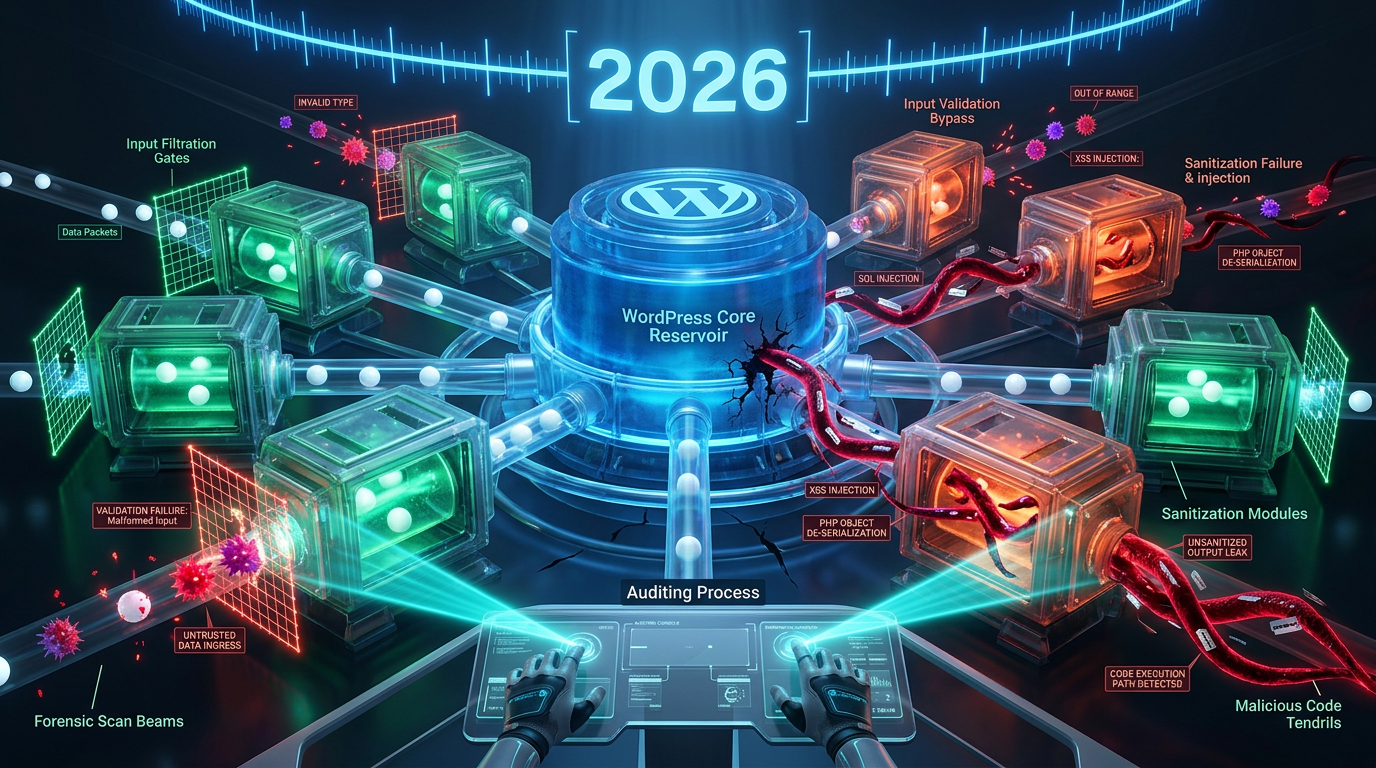
At its core, WordPress plugin API security revolves around safeguarding communication channels and data exchanges. This occurs when a plugin sends or receives information from an external API. This negotiation process, while seemingly straightforward, involves numerous potential vulnerabilities if not handled meticulously. Therefore, developers must prioritize secure coding practices from conception through deployment and ongoing maintenance to ensure robust WordPress plugin API security.
The Role of API Keys and Authentication
Most external APIs require some form of authentication to ensure that only authorized applications can access their services. A common method involves the use of API keys. These unique identifiers act like passwords, granting access to specific API functionalities. However, if an API key is exposed, it can be misused, leading to data breaches or unauthorized operations, compromising WordPress plugin API security.
- Strongly recommend using environment variables or dedicated configuration files for storing API keys, rather than hardcoding them directly into plugin files.
- Implement appropriate access controls, ensuring that API keys only have the minimum necessary permissions.
- Regularly rotate API keys, especially if there's any suspicion of compromise.
Secure Data Transmission
The data exchanged between a WordPress plugin and an external API often contains sensitive information. Ensuring this data remains confidential and uncompromised during transit is crucial. Secure transmission protocols are essential to prevent eavesdropping and data manipulation, which are vital for maintaining WordPress plugin API security.
- Always enforce HTTPS (SSL/TLS) for all API communications. Unencrypted HTTP connections are highly susceptible to man-in-the-middle attacks.
- Validate SSL certificates to ensure the plugin is communicating with the legitimate API endpoint and not an imposter.
- Consider implementing additional layers of encryption for particularly sensitive data payloads, even within an HTTPS tunnel.
Common Threats to WordPress Plugin API Security in 2026
As technology advances, so do the methods employed by malicious actors. In 2026, several prevalent threats continue to target WordPress plugin API security, requiring constant vigilance from developers and website administrators alike. Understanding these threats is the first step in effective mitigation.
Insecure Direct Object References (IDORs)
IDORs occur when a plugin exposes internal implementation details or allows users to access resources directly by manipulating a parameter value. For example, if an API call allows a user to access /api/users/123, an attacker could change 123 to 124 to access another user's data. This represents an IDOR vulnerability, directly impacting WordPress plugin API security.
This can lead to unauthorized data exposure, especially when dealing with APIs that retrieve or modify user-specific information. Therefore, robust authorization checks are needed for every API request.
Cross-Site Scripting (XSS) via API Responses
If an API response contains unvalidated or unsanitized user-generated content that is then displayed on the WordPress site, it can open the door for XSS attacks. Attackers can inject malicious scripts into API responses. These scripts then execute in the user's browser, potentially stealing cookies, session tokens, or defacing the website. This is a significant concern for WordPress plugin API security.
All data received from an API, especially free-text fields, must be properly sanitized and escaped before being rendered on the frontend of a WordPress site.
Server-Side Request Forgery (SSRF)
SSRF vulnerabilities allow attackers to trick a server-side application into making requests to an unintended location. In the context of WordPress plugin API security, an attacker could potentially force a plugin to send requests to internal network resources, other internal services, or even local files on the server itself. This bypasses firewalls and other protective measures.
Strict input validation and whitelisting of allowed domains for API requests are critical to mitigate SSRF risks.
Best Practices for Enhancing WordPress Plugin API Security
Implementing a proactive security posture is non-negotiable for any WordPress plugin interacting with external APIs. Adhering to these best practices can significantly reduce the attack surface and fortify your plugin's defenses, bolstering overall WordPress plugin API security.
Input Validation and Output Sanitization
This fundamental security practice is often overlooked but remains one of the most effective. All data entering the plugin from user input or API responses must be thoroughly validated against expected formats and types. Similarly, all data being outputted to the user's browser or sent to an external API should be properly sanitized or escaped to prevent code injection attacks, which is crucial for WordPress plugin API security.
- Use WordPress's built-in sanitization functions (e.g.,
sanitize_text_field(),wp_kses()) extensively. - Validate all parameters passed to API calls to ensure they conform to expected values and ranges.
Secure Error Handling and Logging
Transparent error messages can inadvertently disclose sensitive information about your plugin's internal workings or API endpoints to potential attackers. Therefore, implement generic error messages for end-users while ensuring detailed errors are logged securely for developers. This practice is key to maintaining strong WordPress plugin API security.
Comprehensive logging of API interactions, especially authentication attempts and failures, can provide crucial forensic data in the event of a security incident. Ensure logs are stored securely and rotated regularly.
Regular Audits and Updates
The threat landscape is constantly evolving. Regular security audits of your plugin's code, including API interaction points, are essential. Staying up-to-date with the latest security patches for WordPress core, themes, and all plugins is equally critical. Outdated software is a primary entry point for attackers.
In 2026, security researchers are continually discovering new vulnerabilities. Keeping your plugin and its dependencies current is your first line of defense in maintaining robust WordPress plugin API security.
The Future of WordPress Plugin API Security in 2026
Looking ahead, the landscape of WordPress plugin API security is poised for further advancements. Expect to see greater adoption of emerging technologies and methodologies to secure these vital connections.
Leveraging AI and Machine Learning for Threat Detection
Artificial intelligence and machine learning are increasingly being integrated into security solutions. These technologies detect anomalous API access patterns, identify brute-force attacks, and predict potential vulnerabilities before they are exploited. Moreover, they can analyze vast amounts of data to flag suspicious activities that human analysts might miss, thereby enhancing WordPress plugin API security.
We anticipate more WordPress hosting providers and security plugins offering AI-driven API protection features directly embedded into their services, making advanced threat detection more accessible for site owners. For further reading on AI security, consider exploring resources on OWASP Top 10 for AI/ML.
Increased Focus on API Gateway Security and Rate Limiting
API gateways will play an even more critical role as centralized control points for managing and securing API traffic. These gateways can enforce policies such as authentication, authorization, rate limiting, and traffic shaping, effectively acting as a firewall for API interactions. Rate limiting is particularly crucial to prevent denial-of-service (DoS) attacks and brute-force attempts on API endpoints. Best practices for API gateway security are often outlined by organizations like API Academy.
Plugin developers should increasingly design their API integrations with these gateway features in mind, understanding how their requests will be handled and potentially throttled by the external service, further strengthening WordPress plugin API security.
Emphasis on Zero Trust Architectures
The "never trust, always verify" principle of Zero Trust architectures is gaining significant traction. This means that every API request, internal or external, must be authenticated and authorized, regardless of its origin. For WordPress plugins, this translates to more granular permission models and continuous verification of identity and context for every interaction with an external API.
Embracing Zero Trust principles will significantly enhance the overall resilience of WordPress sites relying heavily on API integrations. It's a fundamental shift towards a more secure digital ecosystem concerning WordPress plugin API security.
Conclusion
The extensive interconnectedness facilitated by WordPress plugins interacting with external APIs is undoubtedly a powerful asset for modern websites. However, this power comes with a significant responsibility to uphold stringent security standards. By understanding the fundamentals of WordPress plugin API security, recognizing common threats, and diligently applying best practices such as robust authentication, secure data transmission, input validation, and regular security audits, developers and site administrators can navigate the complexities of 2026 with confidence.
The proactive adoption of emerging security technologies, including AI, API gateways, and Zero Trust models, will be crucial in fortifying these vital digital "diplomats" against an ever-evolving threat landscape. As WordPress continues to power a vast portion of the internet, ensuring the security of its plugin-API interactions remains a top priority for the entire community in 2026, solidifying WordPress plugin API security.
Frequently Asked Questions

Written by Aras Akıncılar
Uzun yıllara dayanan WordPress deneyimine sahip bir siber güvenlik uzmanı olarak, eklenti ekosisteminin derinlemesine analizine odaklanıyorum. Güvenlik açıkları, performans düşüşleri ve uyumluluk sorunları üzerine hazırladığım makalelerle, WordPress kullanıcılarının sitelerini daha güvenli ve verimli hale getirmelerine yardımcı olmayı hedefliyorum.